Draped around my cousin’s neck dangled a golden pineapple charm from a golden chain.
Genna’s pineapple necklace, though subtle, instantly commanded all my attention.
“Want to hear something cool about pineapples?” I asked.
(more…)
Draped around my cousin’s neck dangled a golden pineapple charm from a golden chain.
Genna’s pineapple necklace, though subtle, instantly commanded all my attention.
“Want to hear something cool about pineapples?” I asked.
(more…)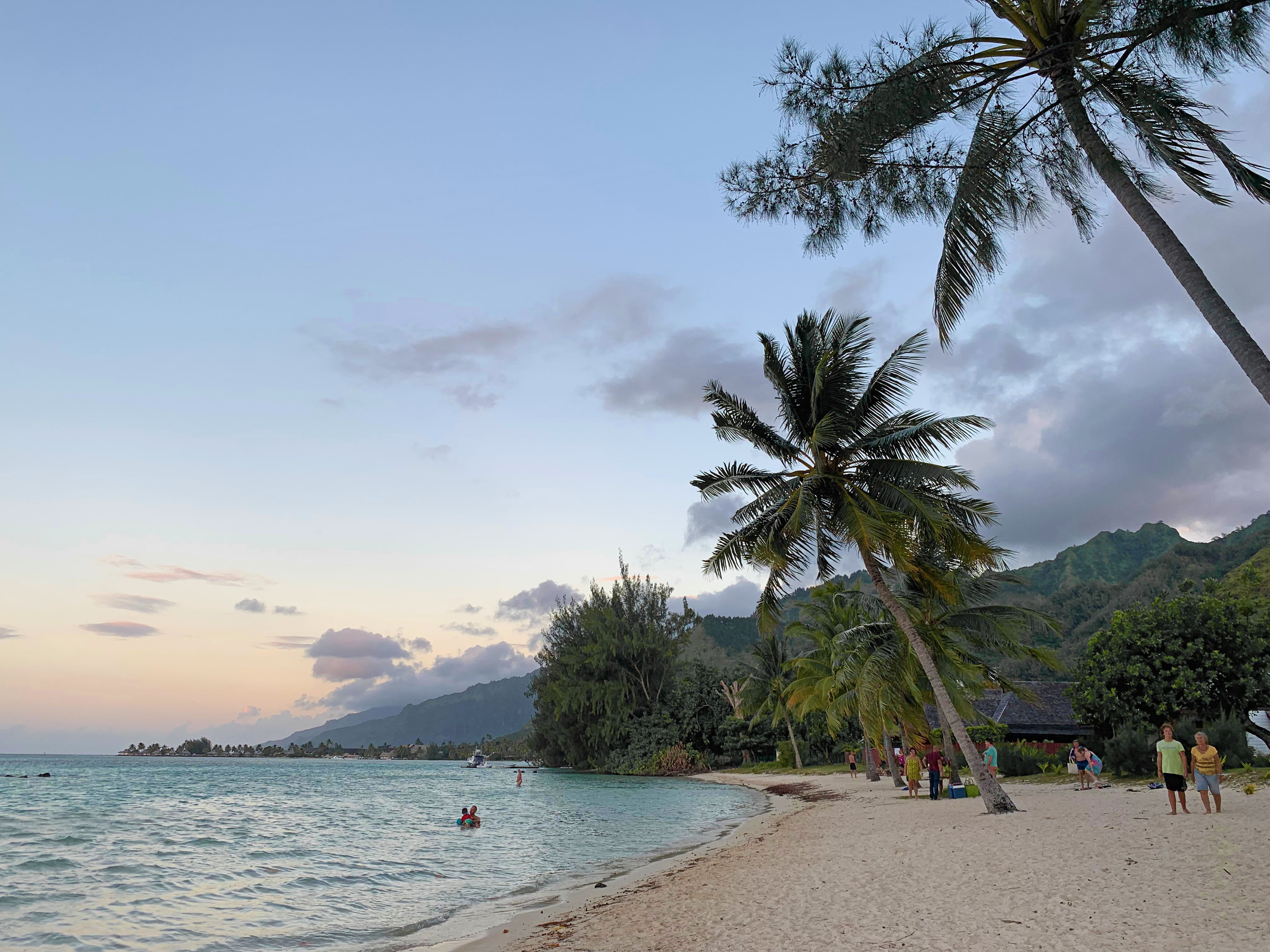
Moorea is Tahiti’s more touristy “mini-me” right across the water. While not as familiar as Tahiti or Bora Bora, Moorea boasts an incredible lineup of adventure activities against an idyllic, romantic setting at a budget friendly cost compared to Bora Bora.
(more…)Mo’orea is Tahtian for “yellow lizard” originating from a Tahitian legend of a woman who gave birth to an egg that eventually grew into a giant yellow lizard.

I’ve heard the joke, “I’d like to go to Bora Bora, but then I’d be too Poora Poora” more times than I can count.
Which is funny, because the island’s name traditionally started with “P” in the Tahitian language. Bora Bora IS actually Pora Pora, when you look at its ancient roots. So yes, the warning is in the name itself.
Is Bora Bora expensive? Yes.
Is Bora Bora worth it? Absolutely.
(more…)
Surprisingly, one of the most common questions I’ve received since returning from the islands of Tahiti has been:
The food of Tahiti blends of Polynesian, French, and Chinese cultures. And it’s really quite delicious.
(more…)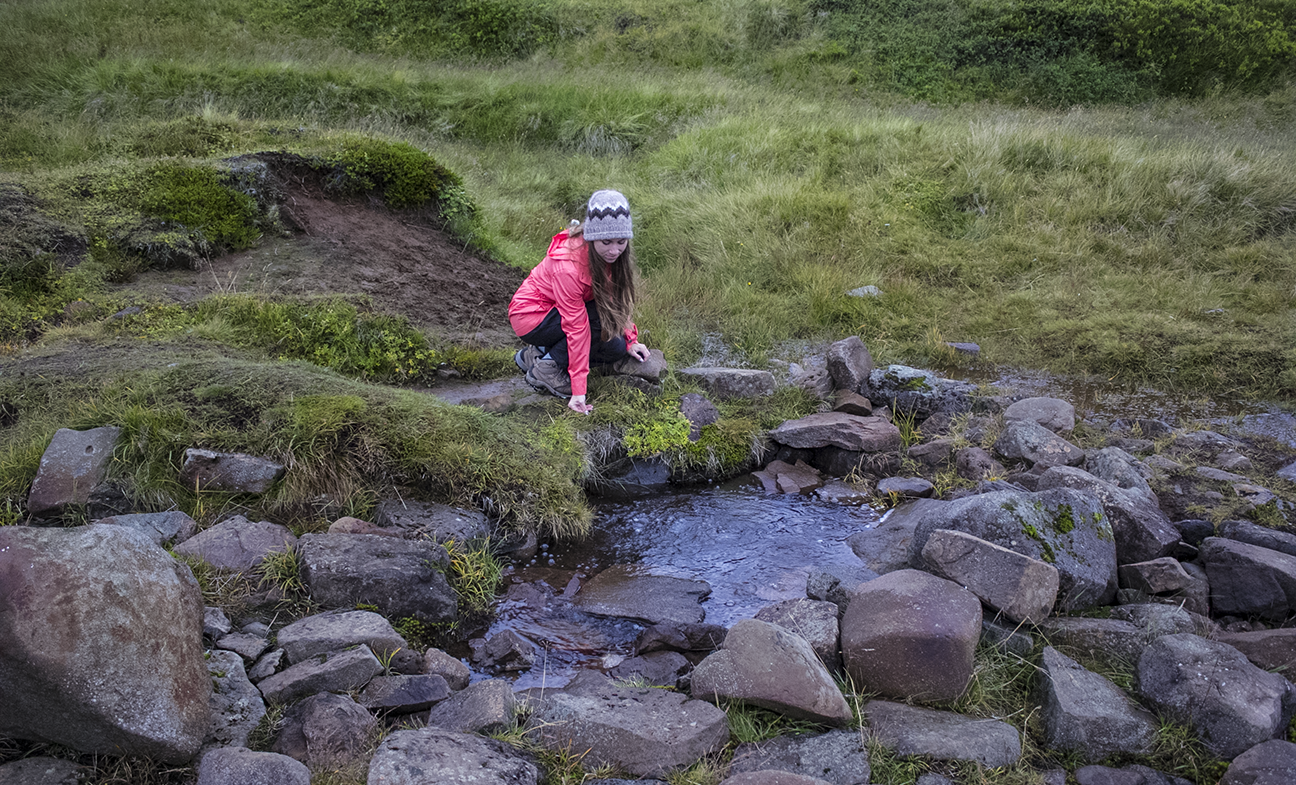
I’m thirsty.
Thirsty for some natural Icelandic spring water straight from the earth. I want to taste those Icelandic mineral springs again. Filtered by nature. Melted from glaciers. Cold. Earthy. Maybe a little bit of a metallic taste. MMM.
During our honeymoon in Iceland, the epic 9-day Iceland road trip, we veered off Ring Road to explore Snaefellsnes Peninsula. I love that area of Iceland. If you’re planning a trip to Iceland, definitely add it to your itinerary. Sure, we could barely see a thing because of Mother Nature’s foggy fury, but this peninsula is more than just pretty landscapes. There are so many cool things to do in Snaefellsnes Peninsula. It’s where we tried fermented shark (hakarl), got cursed from taking rocks, and drank mineral water straight from the ground.

Home to the frequently photographed Kirkjufell Mountain, Snaefellsnes Peninsula is also home to a less towering wild wonder: natural mineral springs where you can drink water straight from the ground.
We visited two natural springs on Snaefellnes Peninsula: Okelda Mineral Spring and Raudamelsolkeda Mineral Spring. Here’s how to find them.
But first, for your visual delight, a video.
You may notice that these names both have “olkelda” in the word. “Olkelda” translates to “mineral spring” from Icelandic.
Ever wanted to drink magical Viking water used for hundreds of years? Olkelda Mineral Spring first sprung in 1754. It’s been cared for by the farmers who own the land since the turn of the 18th century. When it was analyzed by scientists in the 1970s, they identified it’s healthful properties: high in calcium, sodium, magnesium, sulfate, chloride, carbon and off the charts in bicarbonate. The water is beneficial for people who suffer from heart disease, kidney disease, and diabetes. The water is carbonated with a strong metallic taste. Or, as my husband states in the video, the water at Olkelda tastes like “liquid nickels.”
Drive along the southern side of Snaefellsnes Peninsula on Snaefellsnesvegur (highway 54). You’ll come across a farm with white structures and a sign showing the drinking spring’s chemical properties. Actually, I think there’s an “Olkelda” road sign in the vicinity, so look out for that as a landmark. If you search “Ölkelduvatn Mineral Spring” on Google, you should be able to find it. It isn’t far off the road. Be a good visitor: drop 200 krona in the donations box at the sign. Then pump the water from the well into your water bottle. Drink up!


If you didn’t know it existed, you’d never find Raudamelsolkelda unless serendipity lured you to its bubbling pool. There isn’t much information about his drinking spring online; I first heard of it from Guide to Iceland. It’s a small natural spring encompassed by rocks. You’ll recognize it as soon as you see it. At first, every hygienic instinct will advice against drinking from a bubbling pool in the middle of a field of sheep. But trust me, the water at Raudamelsolkelda tastes colder, cleaner, crisper than Olkelda.
The journey to Raudamelsolkelda is just as scenic as the water is delicious.
Not far from Olkelda, continue on Snaefellsnesvegur (highway 54). Turn at the Gerduberg Cliffs sign. You’ll be trekking down an unpaved road for quite some time. An incredible wall of basalt columns tower to the left. A large, mountainous pile of red pebbles sits to the right, like a dormant volcano. At the end of the road, there’ll be a small lot. Park there. Walk through the lava field toward the waterfall. Cross the bridge and continue on a worn path, which should lead you straight to Raudamelsolkelda.
My advice? Bring a picnic lunch or snack and spend time enjoying the beauty and exploring the area. It’s magnificent.


I lived to tell the tale. *wink*
My personal opinion: the Iceland mineral springs in this post have positive reviews online, stating that they are natural springs that are safe to drink from.
According to the Government of Iceland, “water is generally unpolluted.” There is a protection of water (including ground-water) with The Act on Water Management.
Now, I did find a presentation of Drinking Water and Sanitation Iceland from November 2012 that says, “It must be stated that the water in Iceland is clean as it can be. The population has the luxury to have access to 100% pure water.” I assume this is talking about drinking water from a faucet, and not necessarily ground water from a natural spring. But this is convincing enough evidence for me.
Plus, when reading anecdotes about drinking water straight from the ground or from mineral springs, many Icelanders commented that the cold glacial water is generally safe to drink, warm water is not. That geothermal hot spring breeding all that bacteria with its warmth? Don’t use that to steep your tea leaves.
I assume the source of water for these natural springs is somehow connected to the Snaefellsjökull glacier, which is often revered by those in tune with the metaphysical as one of Earth’s most powerful energy centers. If that’s the case, I’d like to think that a drink from these natural mineral drinking springs could help you live forever. Immortality, I’m coming for you. Maybe good ole Ponce de Leon was wrong. Maybe the Fountain of Youth is actually on Snaefellsness Peninsula in Iceland.
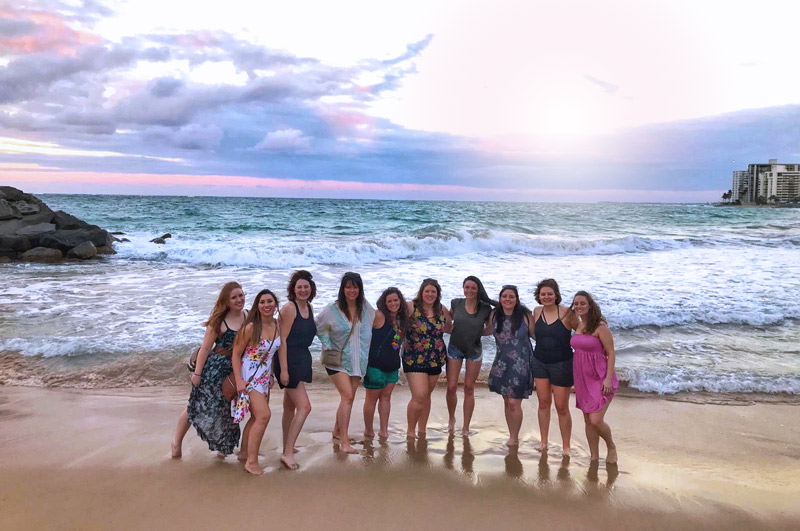
A bachelorette party in San Juan, Puerto Rico. Palm trees swaying against a backdrop of sunny blue skies. Powerful waves crashing against a sandy shore. Crispy empanadas selling out of a questionable recycled bag from a weathered lady on the beach. Drinking coconuts whacked by a machete. Watercolor sunsets. Lively salsa music resounding off pastel facades.
All of this, but with my best friends in the entire world.
There’s a contrasting energy in Puerto Rico — an energy that both sizzles and softens. An energy that convinces you to dance until the sunrise. An energy that implores you to close your eyes and breathe the ocean air. An energy that makes Puerto Rico one of the best places for a destination bachelorette party.
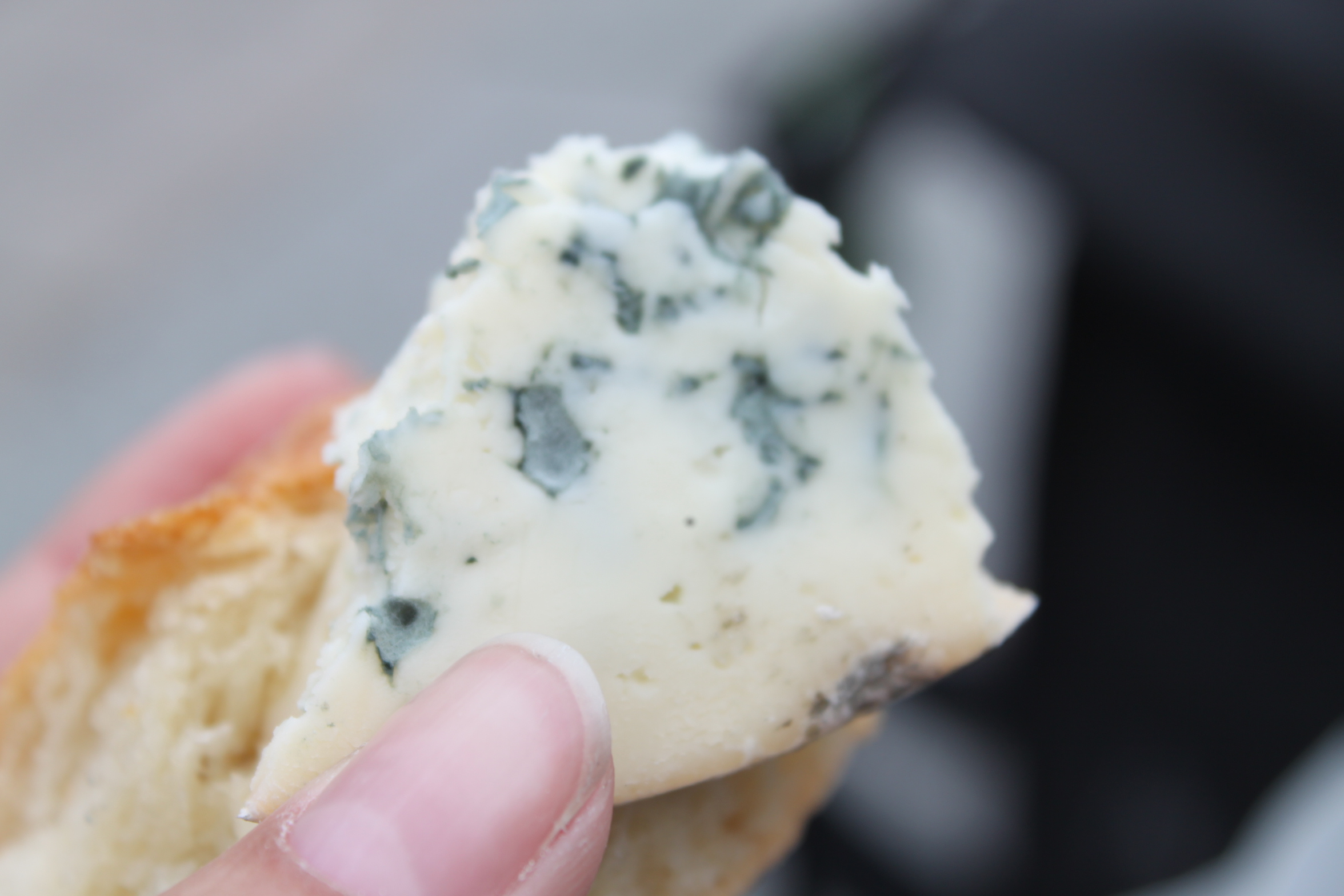
I swear I didn’t fart on the train.
Even though the most putrid smell festered in the train car. And it was all my fault. It smelled like the gas of a thousand sick cows after eating a questionably wilted salad. But I swear the smell didn’t seep from the depths of my bowels.
You see, it all started earlier that day at the Musee d’Orsay. (more…)

On October 20, the lobby at the Grand Traverse Resort became my favorite hotel lobby in the world.
An iconic, award-winning Traverse City hotel, the Grand Traverse Resort and Spa towers above the Grand Traverse Bay. Rotating doors open to a massive expanse, mahogany wood accenting the neutral, alabaster interior. Natural sunlight streams through the atrium and skylights. Lounge chairs and a piano gather in the center of the lobby, beneath dangling flags. An indoor water feature trickles adjacent to the lobby bar toward the back.
Guests check in to reception to the left. A line of eager eyed brides queue up to attend a bridal expo in the ballroom. Straight ahead, a hallway leads to restaurants and a spa. It’s bustling.
There’s an energy in this lobby, but nothing compared to the energy when the hotel lobby came alive that night.
***

My sister looked like she was about to vomit.
“I can’t do it. I’m done.” She lamented, furrowing her brow and clutching her stomach.
No. NO. We’re doing this.
“We can’t give up,” I tried to encourage, while neglecting her discomfort.
Her eyes dropped, surrendering her gaze to the round O of fried batter coated with sweet cinnamon and sugar.
“I’m gonna barf.”
To anyone else, consuming a cinnamon-sugar donut and Michigan apple cider at the height of autumn is a delightful experience. But for my sister, who was now on, well, probably donut #6, that sweet donut indulgence turned sickly. Too. Much. Sugar.
You see, this wasn’t a challenge to eat as many donuts as gluttony would allow. No, we were on a mission to visit as many southeast Michigan cider mills in a day. We HAD to find the best cider mill in metro Detroit. We needed to determine who ranked as our favorite cider mill. We wanted to map out a Michigan Donut Trail or Michigan Fall Cider Crawl and discover the little nuances in atmosphere and flavor that make each cider mill unique.
And, to add to the torture, we filmed it.
While there are plenty of cider mills in Metro Detroit, we chose a particular area with an increased concentration of donuts and cider, which we lovingly and creatively coined the “Apple Corridor” (get it? Apple “Core”-idor?).

Ranking among the top apple producers in the country, it’s no surprise that an abundance of cider mills operate in Michigan.
During the fall, families, lovers, and friends flock to these cider mills. And why wouldn’t they? It’s the most quintessential autumn activity. Yet every cider mill is different and ever donut and cider tastes different.
So I wanted to challenge myself.
Visit as many cider mills as possible in a single day.
Determine which cider and which donut is my favorite. Everyone needs to have their go-to cider mill, right?
So I invited my sister to join me on a mini adventure to visit as many southeast Michigan cider mills in a day. We called it the Sisters Fall Cider Crawl (or the Michigan Fall Cider Crawl).
The spend range at each cider mill will be $2-5. Most cider mills require a minimum $10 spend for credit cards. Bring small denomination bills.
Remember, the goal for the cider crawl is to visit as many Michigan cider mills in a day. If you have a whole donut and cup of cider at every single cider mill, you’ll never make it – you’ll get a sugar hangover by the time you get to your fourth stop. If you’re going with a companion, split the cider and donut.
A sugared palette craves a salty intermission. Ever been to a beer festival and see people wearing pretzel necklaces? Same applies for the cider crawl. Trust me, your taste buds will want a break from all the cider and donuts. Bring something like popcorn or pretzels.
I created the map below to help you with your own Michigan fall cider crawl. Zooming into southeast Michigan, you’ll see the cider mills we visited in a different color. If any orchards/cider mills were missed, please send me a message or add it to the comments below and the map will be updated.
For the sake of good puns, we’ll call it the Apple Corridor. You get it, right? Apple Core-idor?
There’s a stretch of cider mills that straddle the borders of Oakland County and Macomb Country (zoom in on the map above to get a better view). This concentration of orchards and cider mills create an efficient trail to easily visit over 10 cider mills in a day. And if you’re extra ambitious, depending on where your journey begins, more can be added.
For the sake of this post, we’re starting south and working our way up.

Shelby Township, Michigan | est. 1956
A family-owned cider mill that makes its own products. Middleton Cider Mill is a smaller, less busy alternative to the popular Yates up the road. A duck pond keeps children entertained. Middleton’s cider is light and refreshing.

Rochester Hills, Michigan | est. 1863
One of the most popular cider mills in Michigan, Yates Cider Mill has been a community staple since the 1800s, following the same cider recipe that families have enjoyed for over a century. Walk along the Yates Trail adjacent to the Clinton River. Yates’ cider is a flavorful burst of apples. The donuts are puffy and soft, like dumplings.
Yates also has an outpost in Canterbury Village in Lake Orion, Michigan.

Rochester, Michigan | est. 1981
The most photogenic cider mill, Rochester Cider Mill is seasonally decorated with pumpkins, mums, cornstalks, and golden leaves to complement its antique farm equipment. While its charm stays the same, the cider does not. The flavor varies week to week depending on the apple inventory.
Rochester, Michigan | est. 2012
Paint Creek Cider Mill is nestled along the Paint Creek Trail and Paint Creek. The cider’s apple flavor is strong. The donuts are crispy, with cinnamon mixed in the batter.

Rochester, Michigan | est. 1970s
A small cider mill with big flavor! only a quarter away from Paint Creek, Goodison Cider Mill creates an incredible product using a century old apple press. The cider is rich and smooth. The donut tastes like an elephant ear, with cinnamon and sugar that coats the dough to create a crunchy layer. Delicious.

Washington, Michigan | est. 1970s
Originally a 1920s dairy farm, Verellen Orchards added cider and donuts in the 70s. Sit among their fruit trees as you enjoy their cider and donut. Their donut has a hint of orange blossom flavor. The cider is sweet, definitely the sweetest of the ciders listed here!

Washington, Michigan | est. 1813
A fall family fun-zone. There’s so much to do and see at Westview Orchards (especially for kids!). You can taste the six-generations of family in their cider and donuts. The best way I can describe their cider is thick and opaque. It’s good!
Washington/Romeo, Michigan
Known for their u-pick fruits! Unfortunately I skipped this place on my cider crawl (needed a sugar break, see advice above) so I can’t comment on their cider and donuts. Let me know what your experience with Big Red was like in the comments.

Romeo, Michigan
Just up the road from Big Red, Stony Creek Orchard is the contrast to the crowded, overwhelming super mills. Stony Creek is small and intimate, with more of a family farm ambiance. PSL lovers, sometimes this orchard will make pumpkin spice donuts!

Romeo, Michigan | est. 1970s
Dirt roads lead to good things. Like Hy’s Cider Mill. Hy’s has that classic cider mill vibe, with a massive stretch of apple trees and empty fields and trees as far as the eye can see. Their donuts are very soft and puffy and their cider has a hint of tartness.
Armada, Michigan | est. 1946
One of my family favorites. Nobody can go wrong with a visit to Blake’s Orchard. Beyond their amazing cider and donuts, they have u-pick, family activities, and my favorite, HARD cider.
As mentioned earlier, I challenged my sister to visit as many Michigan cider mills as possible in a day. We recorded the entire adventure, so you can watch our live reactions to the different cider mills. Hope you’re entertained! Watch out, Travel Channel. The Carnagie Sisters are the next big thing in video production!
And the award goes to…
Fluffiest, puffiest donuts: Yates Cider Mill & Hy’s Cider Mill
Crispiest donuts: Paint Creek Cider Mill & Goodison Cider Mill
Most cinnamon-y donut: Paint Creek Cider Mill
Tastiest cider + donut combo: Goodison Cider Mill
Sweetest cider: Verellen Orchards
Tartest cider: Hy’s Cider Mill
Best family-fun cider mill: Westview Orchards, Blake’s Orchards
Most instagrammable cider mill: Rochester Cider Mill
Don’t forget to pin it!


There was a little problem with our trip to Japan.
For most of the trip, we felt like observers, not participants.
It was like we were window shoppers, not understanding the display. Like wanting to jump into the ocean, but being held back by a sign that read, “No swimming.” Like my brain was trying to process a thousand pieces of information a minute with nobody to ask “why?” or “how?”
That feeling of being an observer pushed a wedge between seeing and understanding that I so desperately wanted to bridge. Japan, with all its colors and all its sounds and all its people, sometimes felt… empty.
Enter Yuka Mazda, petite stature wrapped in a sunshine-yellow apron dotted with caricatures of sushi.


Yuka and her sushi making class transformed us from observers to participants. She filled that empty void with energy and expertise and Far East fare.
The minimalist kitchen in her home served as the classroom for an afternoon of creating. The agenda: steaming rice, cooking miso soup, making soba sauce for chilled tofu, preparing wasabi, crafting sushi, and reflecting with a matcha tea ceremony.

“Game over!” she chided playfully, proclaiming our sushi ruined if we opened the lid of the cooking sushi rice. Patience. Patience to allow the rice to bloat into soft, sticky pearls. The rice, which so often I considered an afterthought, proclaimed center stage. The preparation required team effort: someone to hold the wooden hangiri mixing tub, someone to rapidly stir the rice and vinegar, and another to cool with an accordion hand fan.
Rice, in Japan, is a culinary staple. And if you’ve ever dined in Japan, you know the rice tastes different. That’s because the rice in Japan is not the same as other rice around the world. The rice is held to high quality standards and according to our teacher, you don’t find these prime ingredients outside of Japan – unless you’re dining at Michelin restaurants.
Scooping a small handful, Yuka weighed the rice, removing and adding grains to achieve the optimal amount. Like a masseuse, she shaped and massaged the rice with delicate, intentional pressure to form a perfect shape to serve as a bed to the sashimi.
We mimicked Yuka, awkwardly manipulating our untrained fingers. Tiny rice grains, the humble beginnings of cuisine that define a culture.
As we worked the rice, each student took a turn to make wasabi. At my opportunity, I followed the gestures, rubbing the wasabi root rhythmically against leathered shark skin. With each motion, soft jade paste gradually scraped off the root.
It didn’t stab the sinuses like the “wasabi” back home. The wasabi I know back home is grainy-textured horseradish, dyed sickly green.
This wasabi was different. This was REAL wasabi. Wasabi with a delicate flavor, a muted bite, meant to complement the sushi, not overpower it.
Yuka arranged the remaining ingredients – bold and colorful, paint for our palettes of sushi art. Orange salmon streaked with pale marbling, shiny bulbous ikuro, deep pink tuna, bright yellow egg cake, dark evergreen nori, and spring green fillers like cucumber, avocado, and something else that looked like a leafy chive.
Sourced from the Tsukiji Fish Market that morning, Yuka provided the finest, freshest ingredients. That chunk of tuna? Easily $100.
There were rules to follow too: salmon and tuna never belong in the same roll. Don’t taint the fish with your dirty fingers.


She retrieved her knife, visually worn, but sharp as a samurai sword. She instructed how to hold the knife while cutting into the thick, fleshy chunk of tuna. Gentle force, but allow the knife’s weight to pull the cut. Do not saw the sashimi. It sliced like a warm scalpel through a stick of soft butter. Quality. That was key. One quality knife comprised Yuka’s sushi arsenal.
Yuka encouraged minimalism, advising that one good knife is enough. She shared where to buy the best knife in the world (hint: right there in Tokyo).

And with our learning minds directing our fumbling, novice hands under Yuka’s instruction amid rich stories of sushi culture and sushi etiquette, we created wonderful bites of sushi art.
Magic.
Too pretty to devour, we ate our sushi as deliberately and mindfully as we made it, welcoming every flavor and every texture to introduce itself to our curious palettes.


Before the goodbyes, we sat in quiet reflection as Yuka whisked matcha in steaming water for a traditional tea ceremony. I looked around the room, an intimate setting, at the additional couple and middle aged solo female traveler. All six of us gathered around the table, centered in the perfect backdrop to experience Japanese culture, Japanese tradition, and Japanese food: Yuka’s kitchen.
I reflected, remembering my feelings before this sushi making class.
Through food we learn, grow, understand. Just like our basic instinct is hunger, we have the human hunger to belong. There was something wrong with our trip to Japan. For much of our trip, we floated. We wondered. We observed. By experiencing Yuka’s cooking class, we created. We learned. We participated. We tasted. We belonged.
xox

Beyond making sushi and eating sushi, the other reward from this sushi making class was learning about sushi culture and sushi etiquette. Some interesting fun facts I learned:
Sushi rolls are actually supposed to be square, not round!
According to Yuka, the premier sushi rice (like the rice we used) can only be found in Japan – it isn’t exported.
Wasabi in the U.S. is not the same as wasabi in Japan. In the U.S. horseradish is used because wasabi root is ridiculously difficult to grow, expensive to ship, and can’t survive the long haul.
The closest to authentic Japanese sushi in the U.S. would be a Michelin-rated restaurant.
It takes years to become a sushi chef. Perfection is required. That wasabi root we rubbed on sharkskin? An apprentice may take an entire year doing that activity every single day, until the perfect wasabi is achieved.
Your sushi chef will add wasabi to your sushi if it is needed. No soy sauce is needed on some maki or nigiri, especially if it already is “sauced” for you by the chef. When in doubt, don’t do it (or ask the chef). When we ate breakfast for sushi at the Tsukiji Fish Market, our chef would advise us whether we should or not (very helpful!).
Pick up nigiri with your hands and dip the fish side into soy sauce. Never soak the rice in soy sauce.
In Japan, salmon is considered a low quality fish.

Clearly I consider this the best experience of our entire Japan itinerary. Taking a sushi making class in Tokyo is bucket list worthy. My recommendation is to take this class at the beginning of your trip. This will afford you the opportunity to ask Yuka for advice or ask questions about etiquette before you feel like an observer as I did.
To book a sushi making class, visit Yuka’s Japanese Cooking School website.
Yuka offers more courses in addition to the sushi making class we took, including gyoza & wagyu beef, teriyaki, and okonomiyaki. Cost depends on the course. The sushi course is most expensive. We paid approximately $80 USD per person.
Yuka provides everything. Just bring yourself.
The class is many hours long. Eat a solid snack. Don’t arrive starving as it’ll be a while until you eat the sushi of your labor. Don’t overbook your day with activities as this will encompass a majority of the day. The sushi class we took lasted five hours (9a-2p). Worth every minute and we were grateful to not have another activity scheduled for the day.
Although I’m not sure if it’s routine, Yuka did offer to take us to the market after class for a brief tour. Another reason to keep your afternoon free.
If you do decide to take the class, I implore that you arrive early to the meeting place, or else you’ll be on your own to find her home. Remember that this is a private residence and addresses in Japan are a complicated thing. Sharing personal experience here — we were late to the meeting spot, the taxi couldn’t find the address and dropped us off at the fire department, the fire department had a hard time figuring it out (even while looking at a giant map on the wall), and lucky for us, Yuka saw us from her window wandering the street. Whew. Will be a tardy lost fool for sushi.
Don’t forget to pin it!
