I traveled to Australia with a boyfriend and returned home without one.
They say traveling with your significant other can be a true test of a relationship. In our case, this proved true.
We arrived in Queensland, Australia – me & Eric, my boyfriend (at the time). When we made our trip home? He no longer held that title. Queensland is the perfect backdrop for couples in love – picturesque beaches, swaying palms, amazing nature… What could go wrong?
“OMG SPIDER”
The untrained eyes become wary of anything that crawls, slithers or swims with that “everything can kill you in Australia” mentality. Because suddenly every spider scurries like a Funnel Web, any reptile/amphibian coils like a brown snake and every crested wave appears as a shark fin. However, in 2 weeks, our closest deadly creature encounter was a croc… on a crocodile boat tour.
“Flat what?Flat white? I’ll just take a black coffee. A long black? Is that just a coffee?”
For the American who needs his daily injection of caffeine (hi, Eric!), the common coffee culture took a minute (or 4 days) to understand. What we’d consider a standard black coffee in the US is our essential “coffee-flavored water” or “filtered coffee” down under. After several failed attempts of ordering a “black coffee” and receiving an unbearably bitter “long black,” we cracked the code that what we consider a standard coffee is not the Australian standard. I have to admit, I grew quite fond of the flat white.
Long black = espresso shot topped with hot water
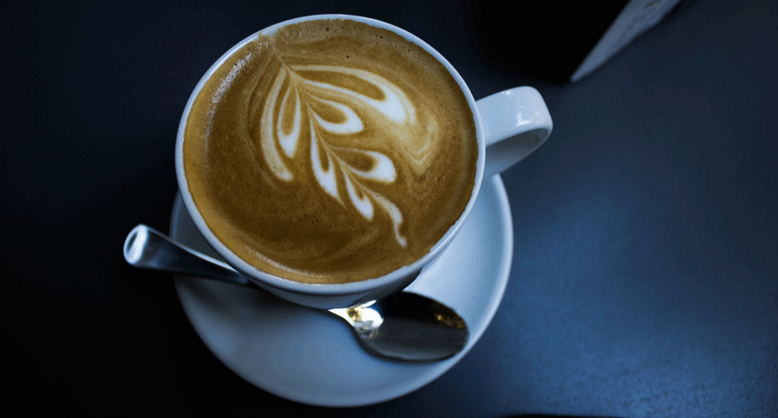
Flat white = espresso topped with steamed milk
P.S… You can now find flat whites in the U.S. [PRAISE YOU, ALMIGHTY STARBUCKS!]
“Maybe this bar has cheap beer…”
Though naming conventions like “schooner” and “pot” rolled off the tongue as easily as “tall” and “short”, the PRICE caused a strange tongue-tied-babbling-choking sound. Most of the bar beer prices seemed to rest over the $8 range for a standard run of the mill, watered-down beer. I would cry if I had to pay $8 for a tall Miller Lite at home.
“Tax & Tips included?! High five!”
With Aussie pricing, what you see is what you get. Tax and “tip” are included in the price presented. There’s neither guesswork in the final bill nor math in determining tip. It is what it is. So maybe that beer wasn’t as expensive after all…?
“Wait a sec. How do I flush?”
While most northern hemisphere dwellers curiously ask “which direction does the water flush in Australia?” I inquired with puzzlement, “Wait, HOW do I flush the toilet?” On my first toilet experience, I was presented with 2 buttons. Two? Buttons? Where’s the handle? Cue porcelain perplexity. The discovery: button 1 = half flush = good for #1; button 2 = full flush = good for #2. This toilet design significantly reduces water usage and energy, making it environmentally friendlier to do your business.
“How are you going?”
Huh? Wait, do you mean “Where are you going?’ Or “How are you doing?” How do I answer a question like that? Perhaps my answer should be, “I am well and heading west.” Really, this Aussie expression asks “how are you” (in American terms) but it still sounds awkward when the word “going” hits the ear.
“Left. Left. Left. Left.”
There’ll never be a “first moment” I’ll remember more about Australia than when Eric leaned in to peer out the window as our flight descended into Sydney. I expected a statement of adoration as the pink sunrise burst over the coast, but instead, the first thing he articulated after a moment of intense observation was complete bewilderment: “Uhhhh…. are they driving on the wrong side of the road?!” The entirety of the trip (especially in Sydney) required complete concentration as we trained our bodies to stay to the left. And eat with our utensils and cups to the left.
“It’s tea time… again?”
I know about the Brits and their love affair with tea, but the Aussie love story with their tea was a new one for me. I mean, it makes sense as a former British colony. But every tour we booked had “tea & damper” scheduled into the itinerary. And damper? What the heck is that?
Rockets belong in space… not on my plate.
Nearly every dish had rocket in it. Turns out rocket is just a less fancy-sounding, more Australian way of saying “arugula.” I still wonder why it’s called rocket.
Speaking of words… AUSSIE SLANG!!
Of course I’d get giddy when the expressions “G’day” or “mate” or “barbie” were used in conversation, but when NEW unheard slang was introduced to my vocabulary, it was equally as thrilling. Some of my favorites from the trip: takeaway = carryout; greenies = hippies; smash repair = collision shop; jetty = pier; heaps = lots/loads
And speaking of speaking… Pronunciation!
Of course that Australian accent is both swoon-worthy and entertaining, but nothing made the sounds of a record ripping than hearing an Aussie say “tomato” or “fillet.”
To-may-toe became Toe-MAH-toe and fill-ay transformed to fill-IT. That silent “t” found it’s place downunder. We could never bring ourselves to say it the Australian way. It was just… impossible for my brain to let go.
“IS THAT A DIDGERIDOO?!”
There’s no mistaking that earthly and distinct noise that resonates from Australia’s aboriginal instrument, the didgeridoo. And it was a complete tourist-Amanda-magnet. Every time I heard one playing in the distance, my excitement overflowed and I NEEDED to find it. It’s not every day that I hear a didgeridoo in the streets.
Asian Persuasion Invasion
Though I see many cultures in the Metro-Detroit area, the Asian diversity was very refreshing to experience. I never associated much of Australia with Asia, even with it’s proximity, but there’s no denying the Asian presence with the people and influence in food and culture. There’s a reason I had a craving for sushi every day.
“Why is everyone so… nice?”
And everything so clean? And life seemingly perfect? Of course there is no perfect destination, but walking around Darling Harbour or Circular Quay gave us an unbelievable sense of utopia. No, these areas didn’t feel touristy, most people we encountered were locals. We felt safe and comfortable. Every one was dressed nicely and acted friendly. There was no litter trashing the area. Even construction sites were thoughtfully beautified as we “pardoned their dust.” Why are people smiling and saying hello? Where are the sagging pants and riffraff? Why am I not clutching my purse securely with both hands like I do back home?
“When can I come back?”
The saddest thought about being a visitor in Australia is just that – being simply a visitor. It is a shame that such amazing country is on the other side of the world and takes more time and money than many can manage. Since we’ve been home, a weekly topic of discussion has been, “How can we get back down under, mate?”
There’s something fishy about Hamilton Island. And no, I’m not trying to be punny or facetious since it is, well, an island that naturally has an abundance of fish.
Sometimes I do my research about a place SO WELL before I decide to travel there. Other times I see a photo, fall into a state of awe, make my travel commitment without much more thought. Such was the case with Hamilton Island. A few photos of Whitehaven Beach and a helicopter view of the tropical Whitsundays left no question in my mind – I NEEDED to see this.
Lucky for me, Hamilton Island – one of the few inhabited islands in the 74 Whitsundays – was one of the destinations I could choose for my 5 Days in Queensland trip.
I sensed Hamilton Island’s “fishiness” before we arrived. Just take a look at their website – perfectly branded and informative; Social media accounts brilliantly managed. Nearly anything I wanted to know about the island or needed to book for the island was centrally located.
Upon our arrival, all visitors were picked up on a bus from the airport and dropped off (for free) at our accommodation. A branded folder intricately stuffed with anything you’d need to know about Hamilton Island waited at our hotel. Details about every restaurant, shop, activity, hiking trail, etc. etc. was a turn of the page away. For the tech enthusiasts/paperless greenies, Hamilton Island even has its own app (I learned in Oz that “greenies” means “hippy.” I like it). Beyond the expected “things to do” guide, this app includes bus timetables, weather information, and audio tours.
Well, that’s convenient!
We discovered that we could swim in any of the nearby pools and our complementary breakfast buffet could be enjoyed at multiple restaurants [by the way, these brekky buffets were ah-mahz-ing]. Every kayak and SUP and sailboat matched with that well branded beachy blue, palm tree green, and sunshine yellow. Even the golf-carts bumped around like a happy little Utopian transportation zooming past the free shuttle service.
Everything was just too perfectly cohesive and in sync with each other. It seemed fishy. It started to feel almost… Disneyworldish (minus random characters frolicking about)… like this destination was perfectly crafted to create an enjoyable experience for its visitors….
Because it was.
It was like some Marketing Guru walked into a Hamilton Island planning meeting and said, “Don’t worry blokes, I got this.”
During the second day of feeling slightly perturbed over this paradise-esque island, we flipped on the TV (it was raining). On played an infomercial (which replayed and replayed and replayed) about Hamilton Island’s history and activities…
Hamilton Island is owned by Bob Oatley. And therefore, many of the businesses on Hamilton Island are owned by the Oatley family as well. The Oatleys are winemakers and sailors… and they purchased Hamilton Island (sounds like a good gig to me). It’s a tourist island and was developed for the purpose of… just guess… tourism! Rich guys with lots of money buying islands and making more money. Sure, there are a few people who live there, but they’re either voraciously wealthy or island workers. As far as I know.
It wasn’t always owned by the Oatleys. The island was first* possessed by Keith Williams, an entrepreneur who charged in during the 1970s to develop the island into a tourist magnet full of hotels, restaurants, a boat harbor, airport, golf course and more. He essentially laid down the blueprint/vision of Hamilton Island’s future. If there’s one thing that stands out on Mr. Williams’ resume, it’s his role in designing & developing Sea World on the Gold Coast. Theme park. Tourist destination. Okay, NOW I’m understanding the origin of the fishiness of this island…
*not, of course, including the original aboriginal island dwellers.
*(and these guys)
It seemed slightly inauthentic and forced, but that’s probably because it was – this “destination” wasn’t established organically. It was pushed there with a purpose, for… tourism! There’s nothing wrong with some good ol’ entrepreneurship to commercialize your own island into a tourist mecca. Shoot, if I had the money… But that’s why the island seemed fishy. It was so perfectly put together, so well-crafted, so designed with the tourist-escapist-mindset. I suppose I wasn’t anticipating the loudness of the commercialization. Maybe I predicted more local charm. We were completely in the company of fellow tourists enjoying their vacation and island workers catering to these vacations. Hamilton Island is a holiday island.
The beauty of Hamilton Island made me breathlessly gasp, “This place is unreal!” And then I found out the beach wasn’t exactly “real” but manmade… yep, totally unreal. Knowing the beach wasn’t natural didn’t make it less beautiful. It just built on the fishiness.
It’s a resort island, duh. Of course they’ll build their own beach! What did I expect?
Answer: See beginning of post where I’m completely taken by the beauty of the Whitsundays without doing any research. I’ve never stayed on an island completely spoiled for tourists. It was a new experience. Not a bad one, just different. No, I didn’t get to meet island locals or behold ‘daily Australian life.’ But that fishy feeling I couldn’t shake? That’s a novice resort visitor staying at her first luxury resort tourist island. And it was pretty blissful. Because I am lucky that a place like that was developed so I could enjoy a sunset like this:
The was much to do and nothing to do. We could fill our days with a million activities and excursions or relax on the beach and lounge by the pool. We could grab tinnies at the convenience store or opulently dine on oysters & champagne at a fancy restaurant. It was on Hamilton Island where I heard my first kookaburra laugh, conquered a bushwalk with incredible views, relaxed on the beach, sailed to Whitehaven, cuddled a koala, and fell more in love with the natural beauty of Queensland.
It was a little fishy, it was a lot expensive, it was brazenly touristy, but it was unpretentiously beautiful. And despite that something fishy, I really, really, really want to go back to Hamilton Island.
There’s no denying the power of a place with a view.
There’s no denying the power of a place with a view that you have to put forth a little effort to see it.
Such was the case with a hike to Passage Peak – the highest point and moderate bush walk of Hamilton Island in Queensland, Australia. It was our final non-traveling day in Oz. After a few days of steady rainfall, the morning began in a misty, tropical haze, but showed promise of clearing. Time for a bush walk. Finally.
The trail begins inconspicuously behind the Reef View Hotel. It’s rather unexpected – preparing for beautiful nature walk – and passing behind the scenes of a massive commercial building. Reminded me of that song… They pavedparadise, put up a parking lot.
Halfway through the journey up, I came to the disappointing realization that I had over-estimated my fitness – it was exhausting! Despite my youth, energy & good health, this became a tiring hike. Kudos to my heavy backpack full of camera equipment & water to add to the challenge. Good thing I had a travel companion: when the backpack got too heavy, Eric took responsibility. When Eric got too hot from the backpack, it switched back to me. Teamwork. Or true love.
Amid the uphill trudge of burning thighs & calves, we admired the abundant nature of the island – flowers, butterflies, greenery. I finally fulfilled a lifelong goal of hearing a kookaburra laugh in the wild (big dreams, right?). Immediate regret bringing that “emergency” umbrella – the trees were natural umbrellas from the periodic drizzle that threatened our trek. I remained constantly over-alert throughout the hike, training my eyes to recognize movements of brown snakes or creepy spiders. Never saw them. Though we did see these sights on our ascent:
The last half mile was the confidence killer. Steep & unforgiving, by that point most of my energy had been expelled in the previous hour. Surely the top will be after the next hill. No? Okay, then the next steep climb? No? Another? OMG ARE WE THERE YET?! A family with kids laughed when they told us we still had a ways to go. Then told us if their small children could do it, we could do it. Ouch.
These “stairs” knocked the wind out of me. Not short-people friendly.
But when we arrived at the top, the views made every step worth it. The clouds cast a muted shadow over the horizon, giving a soft, ethereal view. Like Mother Nature selected her own natural filter. Like I was admiring through a sheer curtain of mist. This vantage point of the Whitsundays would have been worth ten hikes up. Seeing those islands cut like dormant tropical kingdoms through the ocean was more than any words or postcards could capture.
KNOW BEFORE YOU GO
Bring water, but remember there are no bathrooms.
Wear good hiking/climbing shoes. Flip flops are a bad choice.
There is a nice picnic area at one point along the trail.
Pace yourself.
See the highest point in the photo above? That’s where we hiked to. This photo was taken from the balcony at Reef View Hotel, where we began. A long trek, but worth it!
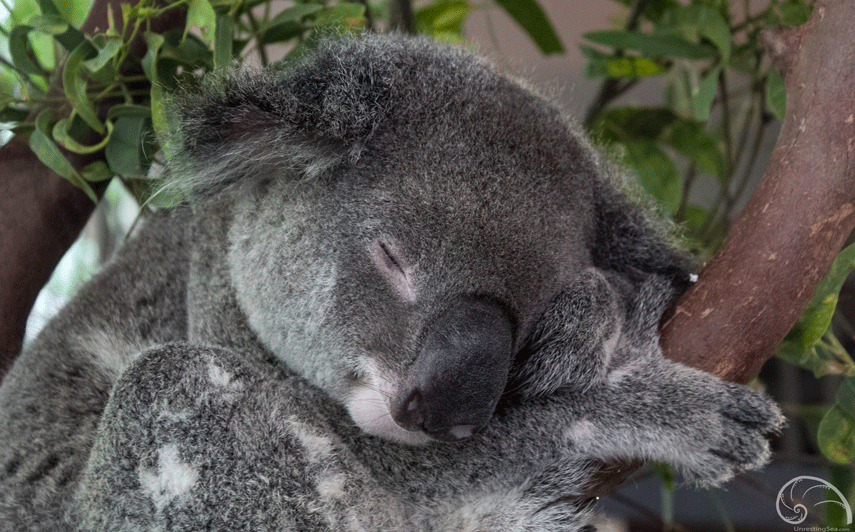
Koalas. Those cute, fuzzy, gray marsupials with noses like big mushrooms and mobility like a drunk baby. It’s criminal to travel all the way down under and not hug this iconic Australian animal. There are only two states in Oz that allow visitors to hold koalas, and Queensland is one of them.
Fun Fact: Did you know that “koala” is the aboriginal word for “no drink”? Because koalas feed on eucalypt leaves with a high moisture level, they usually don’t need to drink water!
We decided to wait until we arrived on Hamilton Island for this animal encounter for the sole reason that WILD LIFE Hamilton Island offers breakfast with the koalas every morning. Breakfast – our favorite (and the most important) meal of the day – WITH a koala dining companion? Sold. There’s also that warm fuzzy thought [pun intended] that WILD LIFE Hamilton Island is not just a zoo – it’s an animal rescue center.
When we entered the vicinity of the restaurant, my first thought was “Where are all the koalas?!” It took a minute of playing Where’s Waldo, but there they were, hanging out in the trees among the diners. We picked a table with a great vantage point. Though they rested in the trees like living ornaments, I couldn’t help but feel that their breakfast duty was more of an annoyance between the squealing kids and clinking of forks scraping away at the eggs, bacon, and sausage brekky. Can koalas roll their eyes? Between sleep, I swear I witnessed the koala glaring through tired, slitted eyes when dishes loudly clanged at the breakfast buffet. But if there is such a thing as relaxing with grace, these koalas were experts.
5 points if you spot the koala! Notice the sign… poor sleepy guy!
After overindulging everything on the menu, it was time for the main event: Koala cuddling. Introducing the cuddler of the day: Willow, the tiniest (& most adorable) koala resident at WILD LIFE Hamilton Island.
I’ve heard that koalas can rip faces off (True? Or no?) and those long, black claws reached out toward me with purpose; I hesitated for a minute, not knowing what to do with myself. Sorry, I’ve never received How To Hold A Koala training before! “Cradle the bottom” the keeper instructed. “Touch its butt?!” I hesitated again, feeling like I would violate poor Willow with some behind contact. Throwing reluctances aside, I ignored the thought of her discolored derriere and reached out to the adorable creature. All she wanted was something to grasp, so Willow reached longingly as she was passed along: I cradled the butt, hugged her close… and she grabbed on to the ta-ta, clutching for extra security. I guess you can say things got personal pretty quickly.
Holding Willow felt like a sack of sand plopped in a koala pillow case. She was a bottom-heavy, floppy creature. Her thick, dense fur, slightly wiry and surprisingly plush wasn’t necessarily soft, but definitely fuzzy and padded and completely cuddle-able. Willow was so cute, I didn’t even mind that she chose to go straight to second base.
Getting Groped by a Koala: Definitely bucket list worthy.
Isn’t she adorable? If I could have kidnapped her and taken her home with me, I would have. But I suppose, in a way, I did. I have the most epic professional souvenir photo of us hanging in my office cubicle. It thrills when my co-workers ask about the photo (“Is that your baby?” “Is that real?” “How did you hold a koala?!”). When my work days get dull & I dwindle to adventure-emptiness, those koala cuddling moments captured on paper prompt a smile. It inflates me with happiness… and hope that more creature friends will find their way into my travels in the future.
Is cuddling a koala something you’d like to do one day? What animals have you befriended on your travels? I’d love to hear in the comments!
In all my education, I can’t admit to ever definitively learning about Australian history or aboriginal culture. But the history I heard during my time down under was a familiar story, like déjà vu from my American history classes of yesteryear. While its comparing wombats to raccoons, there’s still an underlying theme: colonialism came to the “country” and shattered the indigenous culture through land expansion, disease, re-education or, sadly, annihilation. The result from both histories is lost languages, forgotten histories, ended bloodlines and an ugly scar on the past. What does remain are those quirky naming conventions, tribes who were given land reserves, and a new sense of urgency to preserve and share the culture of Australia’s FIRST people: the aborigine.
This is me thinking out loud right now – and maybe someone reading this may have some insight that I hope you’d share: When I think of Australia, the aboriginal people are among the first five things that come to my mind. For the person outside of the US thinking of traveling to the states – is America’s indigenous culture/Native Americans among the top things you’d consider when planning a trip? My instinct tells me that the aboriginal culture is more woven into Australia’s identity than Native Americans are to the United States. That’s just an unbacked presumption. If it’s true, it’s a damn shame, but I digress…
Back on topic.
My point is, I never learned much about the aboriginal culture. While it reminded me of home’s history, there were still some learning moments that I found interesting or surprising during my dreamtime walkabout tour in Queensland.
How we began our journey into the Daintree rainforest – walking through the smoke from the fire pit before entering.
To initiate, our guide “invited” us into the forest with a smoke ceremony – he chanted as we walked through a billow of smoke from the fire. This gave us permission to enter the Daintree Rainforest – the oldest rainforest in the world. One is not permitted to enter the rainforest unattended by one of the tribesman. Today, our aboriginal guide was Dingo. Dingo proceeded by explaining the tale of his friend who entered the rainforest without him and happened upon a stinger plant (very, very painful). Dingo made sure the rainforest had its retribution – he casually avoided telling him the remedy for his pain until he couldn’t take it any longer. I’ve usually been one of the philosophy that it’s better to seek forgiveness than permission… but not when it comes to revered aboriginal land!
Once inside the rainforest, I could feel the sacredness. Vines coil, leaves shimmer, bold sunrays penetrate like heavenly spotlights through the branches. It’s an emerald maze. Just knowing the deadly things hidden within the trees would be enough to keep me out without a tribesman. But despite all the dangers, the forest holds all the remedies. The rainforest is medicinal and healing. The rainforest possesses everything needed to survive. And we know it’s true, as the aborigine have flourished here for ages.
Our guide, Dingo, demonstrating how to use the tools offered by the rainforest – from opening nuts to painting on skin, washing with “soap leaves” and creating shields.
We traipsed along the trail, stopping as Dingo showed us different plantlife and points of interest. We circled around innocent-looking leaves – it was the stinger plant, one of Queensland’s most toxic plants that can leave redness and a painful stinging sensation for months. We analyzed a menacing-looking vine with thorns and learned it to be nature’s fishing wire and hook.
Dingo demonstrated how termite nests are better predictors of the weather than a local meteorologist with their fancy equipment. He passed around tree bark with natural elements to help bug bites. I kept a piece of bark for myself and soothed my red bumps for the rest of the walk.
Termite hill, working hard to forecast the weather.
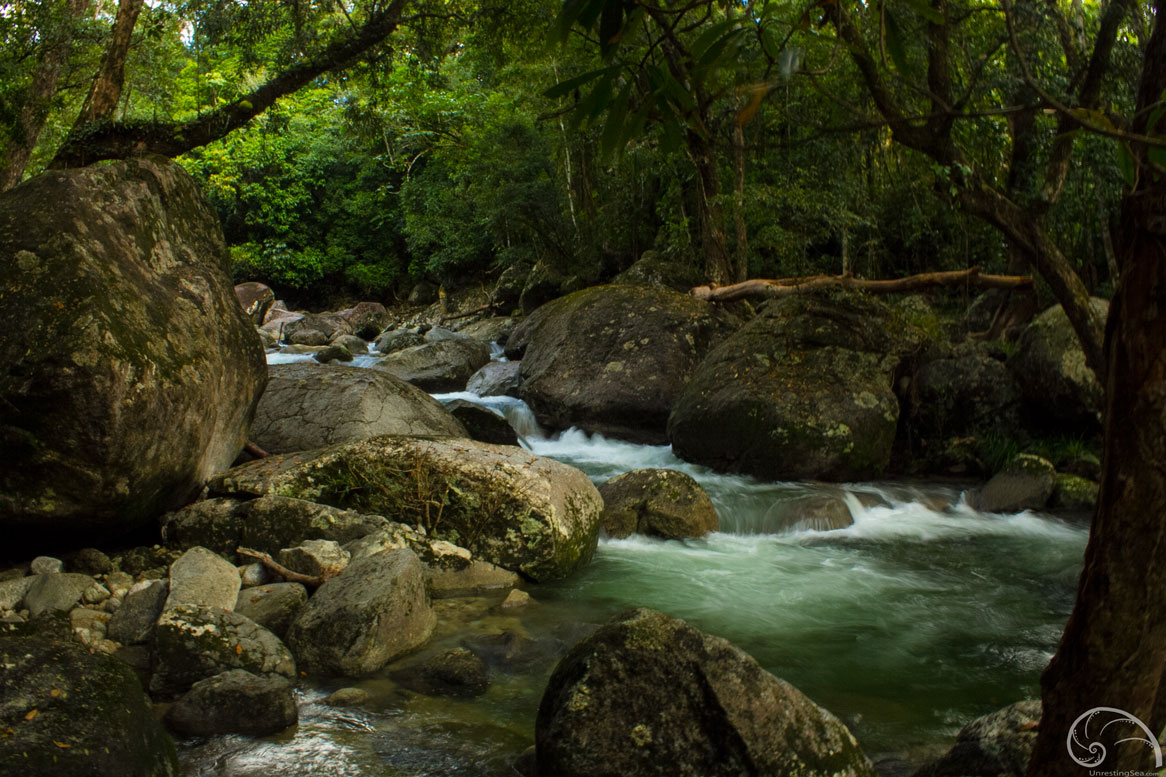
We made our way to the Mossman River – what a beautiful sight! The water slithered over the round boulders in a mystical fashion – I felt like I encountered a magical fairy pond. Dingo wet different colored rocks and began rubbing them against a boulder. Within seconds, he had created “paint” which he used to dab those iconic aboriginal dots on his arm. Then, he grabbed some leaves, dipped them in the water and began to scrub them vigorously. A sudsy substance began to bubble… SOAP! Nature is so cool.
The cultural insight I found most fascinating was the kinship model. Tribes marry other tribes. When a couple is married, the husband is not allowed to speak to or be in the presence of the father of his wife. Contact is not acceptable and should be avoided. The way husbands can make connections with their “father in law” is through one thing… Have you guessed it yet? Children! When a couple has kids, the children go to their grandfather as a way for the husband to communicate with his bride’s father. I asked Dingo “why” and his response was a simple & wonderful, “I don’t know. That’s just how it is.” He laughed as he told us a story where he almost bumped into his wife’s father at an event, and his brother saved the day, avoiding an aboriginal faux pas.
There might be some husbands out there who would appreciate a system like that, right?
I loved our dreamtime walkabout tour in the Daintree rainforest. As our group gathered around a picnic table and enjoyed tea & damper at the conclusion of the tour (there’s always tea & damper), I reflected on how wonderful it is that despite a rough past, there’s an effort to keep these cultures alive and shared. Despite the trauma and persecution these peoples once endured, there’s newfound support for these indigenous communities. It wasn’t until 2008 that the Australian parliament released an official apology to the lost generations of aboriginal culture (2008… I know, right?). I think it such an honor that I was able to spend the afternoon with this group and I sincerely hope that other travelers visiting Australia consider making an aboriginal cultural experience a top priority.
The Mossman Gorge. Seriously beautiful. This is probably one of my favorite photos.
If you enjoyed, this post, don’t forget to subscribe & connect for future updates!
Few words rhyme with my name. Panda. Propaganda. Memoranda. Now I can add Kuranda to the list. A town in Tropical North Queensland, a visit to Kuranda welcomed a slower-paced day of moderate activity. Everyone’s adventurous spirit needs a vacation day, right? Kuranda offered the pause to sit back and observe the scenery or meander through the shops of the village, unrushed, unscheduled. After four active days in Sydney, a day trip to Kuranda was the perfect introduction to Queensland.
Here’s what we did in Kuranda:
C’mon Ride The Train
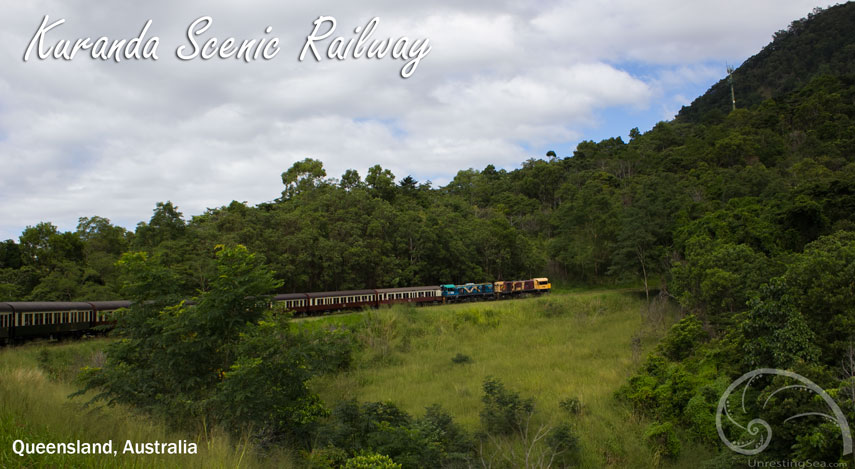
The day commenced with a leisurely 2 hour train ride from Cairns to Kuranda. This historic, mechanical chunk of machinery weaved through the rainforest, charged up the mountains and barreled through the tunnels. Incredible sights unfolded during our journey – from the roaring Stony Creek Falls to the patchwork cane fields to the lush, towering mountains. It’s easy to get lost in the setting and forget that Kuranda Scenic Railway wasn’t always a tourist attraction – it first served as a railway for mining, agriculture and passenger transport.
It took five years to build three sections of this railway including wood & steel bridges and 15 tunnels – remember, this railway was constructed from 1886-1891. Late 1800s! Before we were spoiled with technology, industrial standards and workplace safety. Yes, many men perished during the railway’s construction and the workers were expected to BYOB (bring your own bush tools). Some even worked solely with their hands. Can you imagine digging out 15 tunnels of rock and dirt with your bare hands? Interestingly, most of the workers were recruits from Italy and Ireland. Nothing like some good ol’ pasta & potatoes, eh? It was HARD manual labor. These men faced adversity from steep land grades, decomposed rock, precarious angles, brutal rainy seasons, food supply shortages, and a lack of understanding of the geology of the earth and its dangers.
That’s part of the reason this railway is considered such a feat – for its time and the elements, it’s amazing that this endeavor successfully completed. Development in the 1880s was so hasty, it was believed that many construction projects were fast tracked (pun intended), often derailing (pun also intended) adequate engineering review before plans were approved. But don’t worry – it seemed to work out for them as I lived to tell the tale of this scenic journey over a century after its maiden voyage.
A small corner of Queensland’s most photographed bridge.The roaring Stony Creek Falls as the train slowly chugged by. I could feel the mist on my face… ahhh. They say that the governor of Queensland once came here to visit after the bride was constructed, but no speeches were made that day due to the thunder of the falls.Soak it in…
Meander in Kuranda
Once the train arrived in Kuranda, we had quite a few hours allotted to explore. That’s the beauty of visiting this village – as a completely unscheduled part of our day, we could mosey around town as we pleased. The mango wine teased and the cafes tantalized. There are plenty of food options here. If you’re someone who is anticipating a day trip, I highly recommend checking our their website. We enjoyed strolling through the older part of Kuranda that I would dub “hipsterville.” This corner of the village of Kuranda has an edgier vibe – seemingly more artistic, alternative, colorful and communal. It’s further past the main strip of markets. When we walked through it was pretty empty – which is why I’m under the impression that not many people walk far enough to come across it. Don’t make that mistake!
He purposefully wore that shirt to match the typeface.
Birdmanda in Birdworld
While there are various places to visit in Kuranda for an entry fee – Butterfly Sanctuary, Koala Gardens ,etc. – only Birdworld made our itinerary. I mean, I had to stay true to my nickname, Birdmanda (I’ll save the story for later – but it involves the rapper Birdman & Canadian Geese on Belle Isle). Birdworld was smaller than I expected, but not so small that I’d consider it inhumane. These birds seemed to contently fly around the enclosure, snagging food from the hands of visitors. It was so fun to interact with these birds up close. One bird foe even decided to gnaw on (and break!) my awesome f-stop backpack. Rude! These are my favorite photos from Birdworld:
A casual bro nod? Or friends of a feather?Backpack biter… brat bird
I’ll be posting plenty more Birdworld photos on instagram, so if you have an account, follow me there!
Shopping at Open Air Markets
Kuranda is known for its open air markets. I’m grateful for the suggestion to do most souvenir and gift shopping in Kuranda. While the kitschy Aussie shops were plentiful (kinda like UGG stores in Sydney… EVERYWHERE), there were some stand out stores that sold legitimate artist wares vs. the cheaper, mass-manufactured items. Trust me, you’ll know the difference. When you see the exact same didgeridoo and boomerang taunting in 3 different doorways, you’ll know to avoid it. I need to recommend Doongal Local Aboriginal Art (pictured below) – this is where Eric & I purchased our didgeridoo and boomerangs. The items are organized by artist and each artist has his or her own unique style. Not only are the items signed by the creator, each purchase includes an info sheet with a photo and biography about the aboriginal artist. The store attendant even played our didgeridoo for us to make sure we liked the sound quality.
There’s also a grocery store and bottle shop in Kuranda – so if you’re stranded on a resort like we were, here’s your opportunity to stock up on snacks and wine.
One of the many kitschy Aussie shops you’ll find in Kuranda… get your share of croc skins, kangaroo skins, and bush hats!The face of a man unknowingly about to drop a fat dime on some didgeridoos and boomerangs. ;)
SkyRail
The skyrail cableway began the leisurely descent from Kuranda toward Cairns where our shuttles waited. As we stood in line, we noticed our new friend, Carol, that we had met earlier on the train. We invited her to join us. Sharing her company twice was a blessing. We chatted about Australia and the U.S. We discussed cultural differences, politics, economics, and all interesting and informative conversation we wouldn’t have had unless we spoke with a knowledgeable Aussie. Our eyes were opened much wider thanks to her. We glided high above the canopy and the Barron Gorge. The treetops looked like large fields of broccoli reaching for the sky. The cableway made stops at different lookout points – the Barron Falls, a rainforest stroll – a casual break from the heights. Although the cableway is safe, it’s still a stomach lurcher when you look down.
For the thrill seeker, a day in Kuranda my sound like a boring tourist trap. But for this adverturist, the change of pace and scenery really gave me the chance to inhale deeply and say, “aahh… so THIS is Queensland.”
Descending back to Cairns on the skyrail. Wouldja look at that view!Gliding over the Barron River. Thanks Carol for the pic!My snap of the feeble Barron Falls – they were not in full force!
Eric & I relaxed at the Kewarra Beach Resort & Spa (Kewarra) in the month of May (autumn, in Australia) as our accommodation for our visit to tropical north Queensland. We stayed in the 1 room Pandanus Bungalow hidden in the rainforest, not far from the beach. Here is my review of our Kewarra Beach Resort experience.
SNAPSHOT
The Quick: Kewarra is a secluded, private bungalow-style resort nestled in the natural setting of the rainforest along Kewarra Beach in Cairns, Queensland. There’s a lovely open-air restaurant, laundry room and wifi among many other amenities. There are various bungalow styles and locations on the resort , ranging in amenities and prices.
The Damage: Rooms range approximately $277-600 USD ($300-650 AUD) depending on bungalow style, location and season of stay. Packages are available.
Three Adjectives: Romantic, Tropical, Natural
Recommendation: I adored our stay at Kewarra. If I were heading back to Tropical North Queensland, I would stay again. If you’re planning a stay near Cairns or Port Douglas, consider Kewarra for your accommodation.
HYPES
(AKA things worth bragging about)
Location, Location, Location! Private, secluded, natural rainforest, along the beach, between Cairns and Port Douglas, not too far from Palm Cove… all these things added up to a sublime location.
Call of the Wild. Nature lovers, rejoice! You are living among Mother Nature’s finest flora and fauna. The greatest point of difference about Kewarra compared to the other accommodations I considered, was the embrace of the natural environment. While most resorts have that “embellished with landscaping” image, Kewarra seemed like the bungalows were designed around the native flow of the forest.
Animal Kingdom. It is true that the landscaping at Kewarra is organic and purposefully untamed. That doesn’t mean it is overgrown and unkempt. It means the grounds are a friendlier habitat for the creatures that call Kewarra home. We enjoyed watching wallabies frolic on the lawn, fruit bats hanging out in the trees, gorgeous butterflies fluttering around the tropical flowers, lizards scurrying toward protection, a strange chicken/turkey-like bird digging holes along the path (hilarious, by the way)… every step outside our bungalow created excitement for whatever nature we were about to encounter. We never saw the infamous goanna, however.
Smiling Staff. The staff at Kewarra genuinely cared and recognized our faces as guests. It’s the familiarity that gave that “We matter” feeling. The Paperbark Restaurant workers were amiable and helpful; the receptionist assisted with all our requests (confirming tours, helping book an excursion, exchanging cash for coins, scheduling airport transfers). It left Eric wondering, “Why are people here SO NICE?!” (people aren’t very nice to him too often…)
Size Matters. Our little 1 room bungalow was cozy, not small. A room with a bed, two chairs, side table and tv stand was plenty space. It wasn’t luxurious, but was charming and comfortable. It’s not like we were often IN the room, besides for shut eye and watching the strangest Chinese gameshows ever (but seriously entertaining).
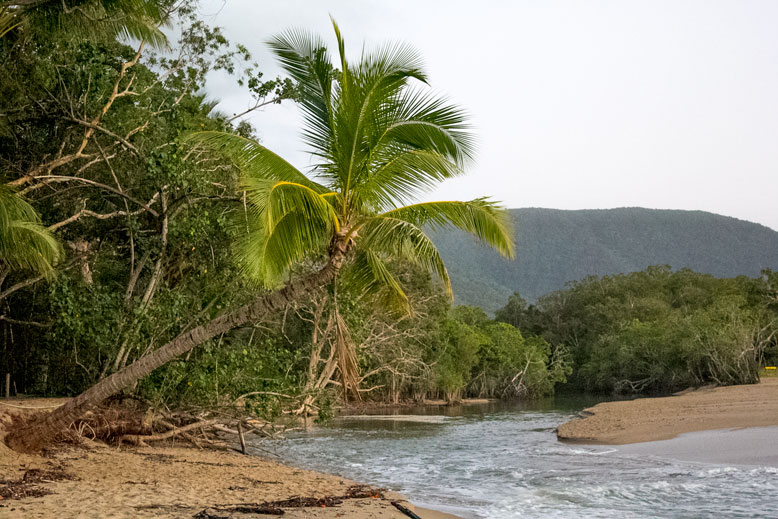
Quiet Public Beach. Kewarra Beach is a public beach, though I never would have guessed it. The sand was litter-free. A few beach-goers relaxed with their families. Couples walked their dogs. A net encapsulated part of the water to safeguard from jellies. Kewarra Beach was tranquil.
Excursion Friendly. Kewarra is a pick-up point for every tour. Going on excursions was hassle-free with Kewarra. The staff confirmed all our reservations and helped book any additional tours. Even if you do not have any plans, there are plenty of brochures at the desk to make last minute planning easier.
Laundry Facilities. Back toward the entrance of the resort, Kewarra has a small building beyond the parking lot dedicated to two washers and dryers. Although the laundry room was dated, the ability for us to do our own laundry & pay with coins saved so much money compared to the “laundry service” provided at most hotels ($5 to clean my undies?! No thanks).
GRIPES
(AKA notes/complaints worth mentioning)
“Hit or Miss” Restaurant. Though I’d slide the scale toward satisfied vs. dissatisfied, my experience with Paperbark Restaurant was mixed. While Eric would classify his dishes as sublime (kangaroo steak = superb, scallop entree = addicting), I had a couple dishes (i.e. seafood risotto) that were as salty as our Great Barrier Reef excursion. There was an evening when the wait staff forgot to place our order, but they quickly rectified the situation with complimentary dessert (gelato trio… mmm). Brekky was painfully expensive to buy every day – even just for poached eggs on toast – so I’d recommend a package with breakfast included in the morning (or BYO). Keep in mind, there’s a reason why Paperbark Restaurant won TripAdvisor’s 2014 Award of Excellence.
Secluded… and Stuck. While Kewarra is a nice little hideaway, it also means “trap” to guests who don’t hire a car or walk to the bus stop. There really is nothing within close walking distance (unless you want to trek over 30 minutes); essentially you’re bound to the resort restaurant/bar and grounds. We beach walked to Palm Cove one day (40 minutes) for a change of scenery & food. When on excursions, we’d take advantage & purchase snacks/wine from random stores we encountered. Most excursions pick up at the reception of the resort.
Alligator Toots. A barely noticeable odd odor lingered in our room. The veranda of our bungalow overlooked the lagoon – this may have been the culprit of the smell. It was a subtle scent of alligator toots, as my sister would have said during our childhood trips to Florida when we’d cross a swamp/stillwater. It wasn’t terrible and after 5 minutes our noses acclimated… so don’t let that deter you.
Weak Air Con. It was not terribly hot during our travels, but the room felt slightly muggy and never reached that bitingly crisp cold. I could see this being a nuisance in the summer, but for our stay, it was not a hindrance to a comfortable sleep. Just something worth noting.
Lonely Pools. We never saw a soul in the pools. We never swam in the pools. Partly because our days were consumed by activities, partly because the evenings grew dark by 6pm, but mostly because the pools were sheltered by the rainforest. The pools didn’t see the sun, weren’t overly warm, and the leaves from the surrounding trees tainted the water clarity. Oh, and I had the irrational fear that a spider would web down from a tree above. I did see a diligent cleaning crew at the pool every morning, but by the time evening rolled around they’d be full of debris again. But what would you expect from a pool surrounded by trees? The pools are beautiful, but if you’re looking for an open, pristine, sun-filled, Olympic-size pool, this is not it.
Nananananananananana… Bat Land! A point of admiration for Kewarra was the abundance of wildlife. When Eric and I first toured the footpath that weaved around the bungalows, we encountered hundreds of flying foxes screeching in the trees above. This didn’t bother me a bit; I like nature (& bats). We never heard them from our bungalow. But if you were the bungalow beneath the bats? Darn, good luck sleeping. If you have a fear of bats? Darn, happy nightmares to you. Perhaps request that your bungalow isn’t close to the bats to mitigate this issue.
OUR EXPERIENCE
I felt a touch of magic from Kewarra as I researched accommodations from home. Kewarra seemed to offer that unique experience I sought – and it delivered. When the airport shuttle first dropped us off to that lush green canopy and we walked up to the open air reception (open air! no walls! what?!) my expectations for a tropical getaway were already met. Kewarra forever has the honor of being my first ever resort stay, so when our luggage was whisked away to our rooms on a golf cart while we sat in plush lounge chairs enjoying a refreshing, pineapple-y welcome drink, I refrained from a happy dance that wanted to jump around from the excitement of luxury. Kewarra wasn’t a sterile, uniform hotel. Every step outside the bungalows was art for the eyes between the flowers and nature that encompassed the bungalows. The pace of Kewarra felt slow and relaxed. It wasn’t overrun by tourists. Sometimes it seemed we had the whole place to ourselves. I’m so fond of the memories made at Kewarra. We laughed with outrageous joy as we watched a joey wallaby bounce around the lawn like a spazzed out kitten on catnip. I laughed when Eric encountered a gecko in our bathroom. We discovered what a paperbark tree really felt like. I made an embarrassing scene over Eric dipping his toes in the ocean for the first time. Every night ended with watching the strangest Chinese dating game shows. We spent a dark evening taking long-exposure photographs of the stars. We were happy. Truly, blissfully, adventurously happy. And Kewarra was the setting.
LEARN MORE
Here are more ways to learn about the Kewarra Beach Resort & Spa:
Have you ever stayed at Kewarra Beach Resort? Thinking about it? How about any other accommodations around Cairns? I’d love to hear about it in the comments below! :)
*Lucky me – I was a guest of Tourism & Events Queensland from winning a blogger contest. A portion of my stay in Queensland was covered. All opinions are genuinely my own.
My mom works at an elementary school. Five days per week she beholds the innocence of children – their laughs, their curiosities, and their bewilderment of new objects and experiences.Mom recently told me about a child who needed to call home. When he entered the office and mom handed him the handset tethered to that coil cord, he looked at it with confusion. “What is this? How does it work?” This kid had never seen the standard office landline.“What?!” I exclaimed in surprise. “How could he not know how to use it?! You hold it to your ear and press buttons!” But I suppose if a child has only been exposed to the screen of a smart phone, anything else looks foreign. My exasperated annoyance over this kid’s ignorance was cut short, as my mom reminisced on my childhood during a particular occasion at my grandparents’ home. As the story goes, I had a similar reaction at my first rotary phone encounter. I didn’t understand why the “buttons” didn’t “press.”Well, then. Who am I to judge?
Eventually, my education taught me about Alexander Graham Bell and the history of the telecommunications industry. But until that point, I had unfamiliarity comparable to this child.
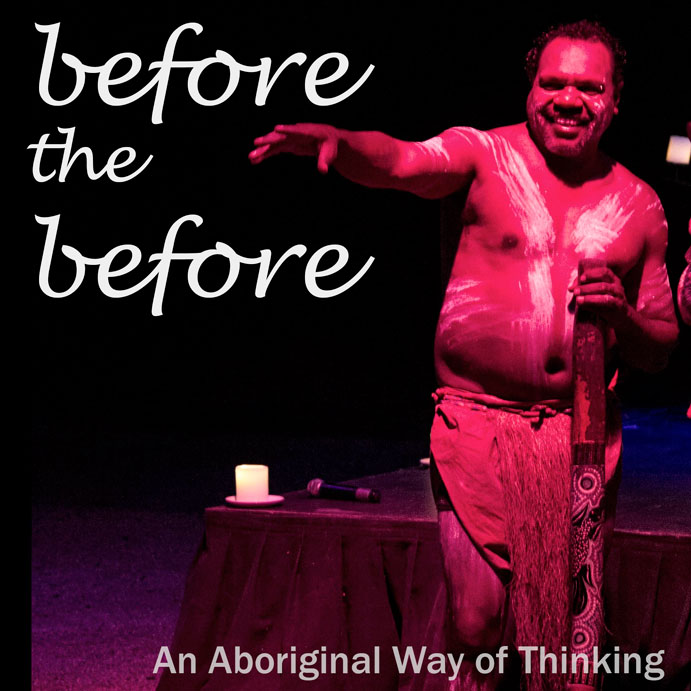
These stories reminded me of a piece of aboriginal culture I learned about during the Flames of the Forest Cultural Dining Experience (you can read more about that awesomeness here). He was from the Kuku Yalangi tribe and he talked about a concept that wasn’t “new” but isn’t ingrained in my day-to-day thought process: Before the before.
He explained the importance that the culture places on understanding the things that came before what came before… that is, the origin or the beginning. And no, I’m not talking the whole creationism vs. evolution debate, but rather understanding the legends, stories, history, timeline and most importantly, the NATURE and EARTH behind existence. But beyond learning about it, they learn to practice it. It would be like my mom’s little student not only knowing about handset and rotary phones, but knowing how to use them and create them and every other facet about them as well.
Food doesn’t just appear on a plate. Or in a grocery store. It comes from the earth. And this tribe teaches and trains their children how to hunt, fish, gather and garden from nothing. They learn how to create the tools to provide food. They learn how nature communicates and responds to the seasons and the elements. They are a part of the rainforest in which they live. They get it on a deeper, more visceral level.
It’s a thoughtful existence. The past is honored and protected and shared. The Kuku Yalangi tribe comprehend and respect the things that came before. If I were to do that with my life, my head would spin. I’m thinking about the Kleenex I just blew my nose in (cute). I start thinking about the branding of facial tissues and the different varieties they come in (cold care? With moisture? With softness of sandpaper? In a blue box? Polka dotted?). I wonder about how a snot rag became so marketable. I think about the process and materials needed to make a tissue and the people who work (kleenex connoisseurs?) to make it happen. I’m grateful for the lack of cloth hankies. I always toss away my used Kleenex without thought – I’ve never considered the “before the before” of a facial tissue.
Try this – for one hour today, think about the “before the before” of everything you touch – from the lunch you eat to your means of transportation to the pen with which you write. A fun exercise to make your brain twirl, right? Feeling more curious now?
It makes me appreciate the interconnectivity of humanity and places. It makes me ponder the past and all the components that led to all things right now. It makes me consider progress, as my “now” will be the future’s “before.” The idea of before the before isn’t ground shaking, but it may shake up the way you think about things – big and small. Its a cultural lesson from the Kuku Yalangi that I’m bringing home from Queensland, Australia. Travel is nice to “oooh” and “awhh” at scenery. Travel is nice to learn new things. But travel is best when it moves – when it shifts our perspectives and reminds us to think a little harder.
Did you have a travel experience that made you shift your thinking to a deeper level? I’d love to hear about it in the comments!
We hopped off the charter bus into the cool, dark rainforest in the Mowbray Valley near Port Douglas. Lit torches lined a dirt path, weaving through the trees to a clearing where others gathered. Clusters of people chatted amongst themselves, all of us strangers to each other. Eric & I procured drinks from the outdoor bar, then awkwardly stood around as passed h’ors devours ushered their way into our stomachs – crocodile on cucumber, caramelized onion/goat cheese tartlet, glazed chicken on a skewer – delectable teasers for starving appetites.
Suddenly, a distant rhythmic drumbeat grew nearer. We clusters hushed and inched toward the sound, not sure whether to follow the beat or wait until it arrived. A male voice cut through the rhythm, singing a foreign melody in foreign words. Then they arrived, aboriginal musicians with faces painted and skin showing. The drumbeat stopped. Silence. All was still but the breeze and the white noise of crickets.
They beckoned us to follow as we continued excitedly down a torchlit path, all of our senses heightened from the darkness and unfamiliar noises. This was Flames of the Forest – an award-winning, aboriginal dining experience nestled in the mystical rainforest.
Our destination was a large outdoor pavilion with three large community tables. After observing the other guests for the evening, we strategically sat at a table with seemingly animated older folks – this proved as an excellent choice of table mates, as the rest of our evening consisted of shared stories, belly laughs, and cross cultural learnings.
Chrystalline chandeliers glittered violet from the ceiling, candles flickered on the tables, and twinkling strands of golden lights swooped through the brush. The light cast on the tall trees like painted spindly hands reaching for the Southern Cross. It was, in a word, enchanting.
The ambience was only the beginning of the experience.
The wine poured. That exotic, wooden, reverberating resonance of the didgeridoo that encapsulates Australia in a single sound played. We acquainted ourselves with our table mates – all midlifers, all from different places in the world. Entrapped in conversation, it almost shocked when our aboriginal hosts – the Creek family of the local Kuku Yalangi tribe – began to speak, welcoming us to the event and explaining the tribe’s culture, values, and beliefs. We learned of the didgeridoo, the concept of “before the before”, and how dreamtime stories are passed from generation to generation. Our host’s personality shined – serious but cheeky, intensive and fierce, descriptive though illuminative. He guaranteed that we would believe in every word that parted his lips… even the fables and legends of his ancestors.
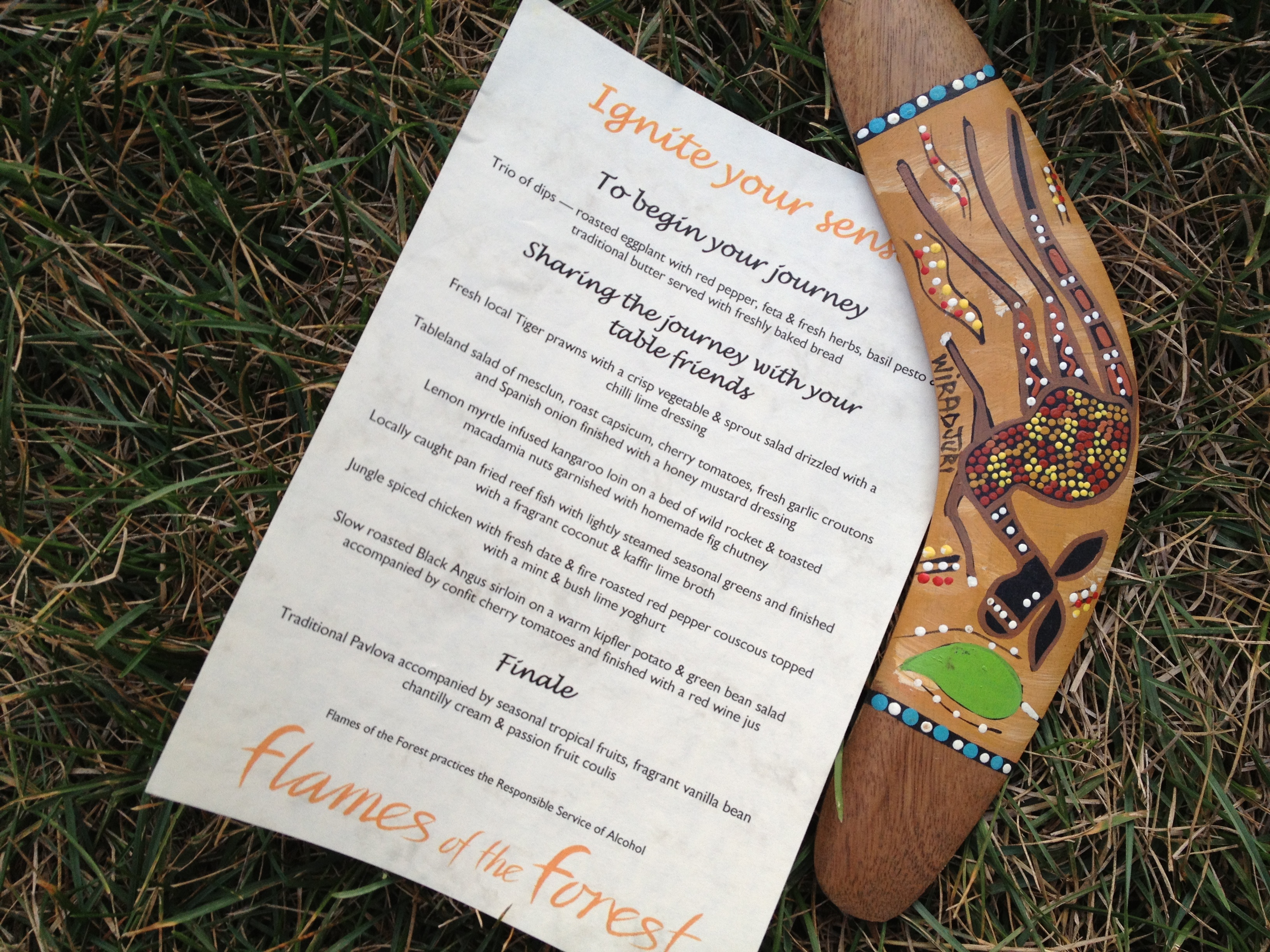
At the conclusion of his speech, dinner commenced. As did the didgeridoo/drum music. Seven courses of locally produced cuisine served family-style around the table. And OH was it delicious. A region can be flaunted through the tastebuds. And this meal boldly declared itself of culinary worth. Just reading the menu is an experience of palatable magic. See for yourself:
Read that menu….
The kangaroo steak ranked among our list of favorites. This was a particular treat – I can’t tell you the last time I walked to the local butcher and said, “Hey, mate, I’ll take the ‘roo!” By the way, my wine glass was never empty. Like, never. Our servers were quite attentive. So by the time our bellies were bursting and the plates were no longer passed, a warm fuzzy wine feeling circulated my veins. Or maybe that was from the amiable company and delectable dishes. Regardless, I was feeling full in the belly and the heart.
With the presentation of dessert launched the dreamtime stories. The host expressed a forbidden love story between a beautiful duck and a river snake, which weaved a marvelous tale about how the platypus came to exist. And as he promised, I believed it.
Though pricey, our evening at Flames of the Forest remains one of my favorite experiences in Queensland. It encapsulated aboriginal culture, indigenous music, tribal legends, gourmet food, unending wine, and new friends against the backdrop of the tropical rainforest. Magical.
KNOW BEFORE YOU GO
Flames of the Forest is limited – in seating and in nights performed. The aboriginal cultural experience is only held on Tuesdays and Thursdays.
I booked my reservation through a third-party site (Viator) which was cheaper than direct. I also used a coupon code from Viator’s Facebook page for an even steeper discount.
Dress code is “smart casual” and heels are not recommended (grass). If you need to look up smart casual, have no shame… so did I.
During the h’ors devours portion of the evening, investigate the other guests to determine who you’d want to sit with at the community tables. We purposefully avoided the young couples who seemed standoffish & aloof.
Bring business cards. If you’re lucky like us, you’ll want to keep in touch with your table mates.
Video recording is prohibited.
Arrive hungry! There is a lot of incredible food.
Have an open mind, drink lots of wine, and enjoy!
What’s the most exotic dining experience you’ve ever had? I’d love to hear about it in the comments below!


 “Maybe this bar has cheap beer…”